
Not everyone can afford to hire a marketing consultant, so we offer you a spectrum of kick-ass guerrilla weapons to arm your marketing war chest with. A lot of small businesses are facing budgeting setbacks and low cash-flow which can lead to a downward spiral of less advertising, less promotional activity and less sales. The ultimate result? Staring into that dark abyss of zero revenue.
Don’t surrender to these cash-strapped times. Instead, don some Recessionista fatigues and arm your business with these creative cost-saving tactics. We’ll show you how great sales and marketing campaigns can be low on cost if big on innovative ideas, imagination and creativity.
Definition of Guerilla Marketing
Jay Conrad Levinson’s Guerrilla Marketing site simply puts it as “The achievement of conventional goals (e.g. Profit) using unconventional methods such as investing energy and ideas instead of money.”
50 Offline Guerilla Tips to help you win the war
Guerrilla marketing behaviour delivers publicity via local unconventional marketing activity that makes people sit up and notice..think “Shock & Awe”.
Public Relations and Publicity
1. The oldest guerrilla trick is old fashion PR so keep at it. Pick up the phone and give local journalists what they need most; great news content – its all about spinning your activity to make it a human interest story. The Guerrilla marketing tactics below are your means to this end.
Treat Your Premises like A Billboard
2. Give a Graffiti artist some free drawing space by letting him use his artistry on your shutters or paint a mural on the side of your Building e.g Homeless Charity Simon Community building.
In this picture the premises were used as a billboard with a very witty recruitment ad:

3. Create in-house exhibitions in vacant display space on your premises to make it more trendy, appealing and noticeable. E.g. Flaghship Department store Brown thomas use art installations from 17 local Artists.
Edgy Window Displays
Your Window Display is your Billboard. Get their attention with a head turning window display even if it comprises stuff you may not eventually sell and chances are, passers-by can be turned into passing trade. You may be mentioned by word of mouth and profiled in the media. Some ideas:
4. Get a live display real human beings like your staff work in your windows.
5. Create a Smashed window effect as seen in this Apple Store just using window paint.
6. Put up a controversial Political slogan to get noticed.
In the picture below homeless charity ‘The Simon Community’ put out a slogan lobbying for Mental health on their premises:

Occupy & Pop-up
If you need to trial a regional market or neighbourhood or need to sell on a seasonal basis, use vacant or slack premises that are unused and help regenerate the city in the process.
Here’s an example from a Pub using the vacant hoarding nearby to highlight its location:

Urban Art, Reverse-Graffiti & Street Propaganda
Great for evoking curiosity and planting brand awareness in specific geographical points in your city. Clever if its used on a route like a bridge with high footfall, allowing you to target specific locations or neighbourhoods.
In this picture, local electricity board ESB worked with the municipal authorities to revitalise the cultural quarter in Dublin by using a Street artist to work on the theme of Electricity on an old Building they own in the district:

8. Use floor stencilling on vacant urban spaces e.g. the Movie Troll-hunter was marketed using a stencil on Bridges in the city saying “Troll Below” sparking off curiosity.
9. Use 3d Floor artist to do something mind-boggling outside your premises front door.
10. Chalk it up :write your website in chalk outside a major event related to what you do say in the carpark or registration driveway
11. Use Reverse Graffiti : Street artists use soap instead of a spray can and a stencil to scrub out an image in public space.
Check out some great examples of Street Propaganda
12. Sustainable design blog, Inhabitat posts some in “Clean Green Street Art hits San Francisco!”
13. “20 Cool and Creative Street Ads” by Bored Panda. Here is an example from their blog:
Here is an example of a clever street ad from their blog:

Urban Hacktivism
14. Play with outdoor installations: turn an outdoor sign or piece of public works into something new and entertaining.
15. Yarn bombing is a good example of people decorating the urban environment & using a product in an unexpected but decoratively visible way – an arts and craft supplier for example could supply free yarn to a knitting Circle and encourage Guerrilla Yarn bombing in the locality. Catch some enjoyable examples in Time Magazine’s photogallery on “The Fine Art of Yarn Bombing”
16. Create Projections onto a blank wall at night and it becomes a natural billboard/ cinema screen e.g. Nokia Snake Game.
17. Another great example : LeCool and Dublin city council used open-sourced collaboration on Dublin Park(ing) Day. The message : re-using parking spaces by turning them into landscaped gardens as a way reclaim city space. If I was a garden centre i would jump on a campaign like this with product placement.
Get Inked
18. Body art as Advertising: using temporary body art / tattoos on your staff as they man events, exhibitions or hand-out flyers in the street. Brand them with your suppliers logo, your logo barcodes or QR code even.
Hack your Product
Use your products in a way you never did before:
19. If you are in electronics, hardware or engineering set up a hacker group workshop or offer your products to a hackerspace in your premises and challenge people e.g. engineering students to find new ways to use your products as part of their thesis.
In House, and Community Events
Tap into the people in your neighbourhood who use your business by providing them with meaningful events in-store or on your premises:
Here a Street Feast is organised by local Publishers for Lecool Magazine drawing in their writers, readers and stakeholders in the city centre they work in:

21. Offer free exhibition space on your premises to new edgy performance artists, a nearby visual merchandising school looking for practice or Design students. You will be getting some amazing visual merchandising for free that may spread via word of mouth.
22. Trade marketing events Get your suppliers to offer a workshop or educational lecture to your clients or customers for free thus getting their collaboration. a DIY store could hold free DIY or upcycling classes using suppliers sponsorship or in-house expertise.
Demonstrations
23. Conversely if you supply into retail: do free in-house events via demonstrations of your product with Q & A sessions and tips on how to use your products in radical new ways.
Old Fashioned Door to Door Selling
24. Need I say more?
Flash mobbing and Crowd sourcing as advertising
25. Use your own staff as Cast or your own customers as a captive audience : Finnair used their hostesses to flash mob passenger with a Bollywood routine to tap into the Indian Market
26. If you are selling hospitality, or are in catering organize a Community Street feast or urban Picnic in a vacant lot and or on your high street with neighbouring businesses.
27. My favourite example of using grassroots communities to promote an event:: the Haka Flash mobs that took place during the NZ Rugby World Cup
Offline Gamification
Playful and Entertaining promotions engage people, tap into their competitive streak and can target sales.
28. The most basic application is a loyalty points system on your reward card e.g. Starbucks allows you to collect stars with every purchase. Or award a badge for targeted buying activity and let customers qualify for the next level of rewards.
29. Gamify the In-store experience: e.g. encourage customers to buy a special basket or combination of goods and reward with a prize, Or the classic “be the 100th customer today and win a free prize” and so on..
30. Other games challenge the public to look out for the product and keep it in the public’s consciousness e,g, a Treasure hunt: find the hidden prize in the packaging and you win a year’s supply, get the golden ticket in our next Flyer mailout, spot our Product on the street .. and so on.
31. The key is to blend this offline activity with online tools in this blog: 5 brands with Winning Gamification Strategies .
Find a Champion
32. Social enterprises and Charities use this all the time: find an important influencer in your sector or celebrity personality that buys or uses their product and use their fame, endorsement and connections to get noticed. It usually helps if you tie this in with charitable activity.
Collaboration
33. Sell your business face to face via Free Business Networking events / Business Speed Dating.
34. Shared Services & Collective bargaining- learn from Cooperatives: collaborate with your business network to pool marketing resources, procurement and engage in collective bargaining.
35. Barter Products and Services within your business network or set up a system of your own between local stakeholders, e.g. Clonakilty Favour Exchange : A skills and labour system set up to service a local business community.
36. Secret Tours get together with other businesses in your high street, local business network or town and organise a secret tour around a theme:for example if you are in hospitality : a secret food trail showcasing the best culinary experiences for tourists and locals e.g. Fabulous Food & Tasting Trails in Dublin
Random Acts of Kindness
37. Do something to raise a smile and bring Goodwill. For example, if you are a in the business of providing e.g. Give Free hugs in a busy high street area outside your premises.
38. Pay it forward: be a parking fairy pay for someone’s parking outside a key establishment like Google perhaps and stick your business card in with the parking receipt on their windscreen.
Give it away
39. In the “Nicked” viral campaign from from Ben Sherman, Display shirts were stuck on the Outside of their flagship window and cameras captured passers bys as word of mouth spread that the products were free : take a look at the Ben Sherman Nicked Window display viral
Product placement
40. Offer your display products as Props to local visual Merchandisers, Theatre or film producers, not the big names of course as they will charge you.
41. Support Local community events like family days or parish fairs by offering your products for use – e.g. Beanbag company sponsors a chillout zone at local festival proving the durability of its products.
Here the local network of Bicycle related businesses supported a Bike Themed Festival in conjunction with the Municipal authorities:

Need Inspiration?
Take a look at what marketing, events & design creatives are using around the world today.
Scan through some of these Global Cool hunting curators:
42. The Inspiration Room a space for viewing creative content from all forms of media around the world.
43. Lecool has published a compilation of 111 City projects around Europe ranging from popup events, urban farming to sustainable design via their book: “Smart Guide to Utopia“ Cool Hunting
44. Design Trends and Ideas blog The Pop-Up City have great examples of urban hacktivism and outdoor guerrilla campaigns.
45. The Trendhunter.com community features micro trends, and cutting edge ideas.
46. For spontaneous raw trend information you can also checkout Trendline online magazine.
How do you know when you’ve nailed Guerrilla marketing?
“Its when the public can’t tell what’s advertising and what’s not.”
Expert Roundup
47. Robert Lum of shares creative and unconventional marketing strategies in his blog:
49. Luke Abbott Social media professional in paddypower.com rounds up:
50. Amy-Mae Elliot has a cool roundup of videos in Mashable in:
In Short: Offline Guerrilla Marketing is about using your Marketing Mix in an unexpected way in unexpected places with unexpected tools: shock, raise eyebrows, titillate and pull at your public’s emotional strings at street level. Or do something altruistic and service your community thus buying you a positive human interest story spin and goodwill in the press.
Key takeaway: Keep it Local: It’s got to be high concept, appealing and relevant to your local community and target audience.
What Next? Go Global: These real world tactics are extremely effective in themselves for getting your brand and business noticed out there. But combine these marketing tactics with the power of the Internet, social media and the various online tools available today, and hey Presto! You’ve just generated food for viral online content.
50 Effective Online Guerilla Marketing Ideas
Online tactics can broadcast and amplify the local Guerrilla Marketing activities you’ve executed offline, but they can also help you build an online following, raise your brand’s awareness, connect to prospects and customers you would never have previously been able to reach, and transform all of your efforts into a comprehensive, strategic, global dominating marketing plan.
But how to get started on the Intraweb? Below are 50 idea’s for you to turn into Guerilla Marketing weapons.
Start with the basics:
Social media presents a huge opportunity for Guerilla Marketing and increasing your revenue and customer loyalty.
Below are a number of steps you can take that will allow you to maximise the possibility of traffic and connecting with new customers. Think of having these social media accounts as setting up an online platform (HQ) for you to conduct your guerilla marketing campaigns from.
51. Spend a little bit of time setting up a Facebook business page and configure your timeline view for best results. Add lots of content in the about section and be personable so that people can connect with you as a person and not just your brand.

Facebook is free, and your customers (and a lot of new prospects) are more than likely already using it, so it can be a great source of direct traffic.
52. Find other pages where your customers and prospects hang out already and post there as your page. Other people viewing those pages will see your posts and if what you’ve said is interesting (or if your logo is interesting) they will click over to your page to check you out. Add value to the conversations and avoid (at all costs) putting out promotional updates for your products/services on other people’s fan pages.
53. Make it as easy as possible to get more likes for your Facebook page.
54. Setup a Google+ business page. Google+ is probably the best single thing you can do at the moment to boost the organic placement of your website in Google’s search results.
55. Setup a Twitter Account. Twitter can be an incredibly powerful tool for finding new customers for your business and its important to have an account so that you can secure your brand name on Twitter if possible.
When setting up the profile make sure to be personable in your profile box and customise the background. Put your brand name in the background if possible and the URL to your website in both the background and more importantly in the profile section.
56. Connect all of your social media accounts so that you only need to post to one place for all accounts to be updated. This free tool will allow you to distribute your Facebook posts to Twitter, Google+ and LinkedIn. Now you will be able to focus on being really active on just one social network; whichever you feel has the largest number of your target demographic of customer.
Content Marketing for Success:
Content marketing involves creating valuable or entertaining content and publishing it online so that people can find it, become interested in it, take value from it and get to know you and your business before they’ve bought from you. It helps establish your authority in your industry.
57. Write blog posts
If you don’t already have a blog, perhaps its time to start one? You can start a free blog on WordPress.com or Tumblr.com, if your current website doesn’t have blog functionality built in and you don’t have the budget to get one added. Just make sure that you put a clickable URL back to your main site on your new free blog. Also use your brand name as the account name when setting the blog up:

Think about whether you have the time to commit to a blog before starting it however, as it will be a waste of time if you don’t post at least twice a week over an extended period of time.
58. You could write guest posts on other blogs where your target market read. This is a great way of getting yourself in front of potential future customers and making them aware of your existence and your knowledge of your industry.
There is a hidden bonus with these posts. Not only will you potentially get direct traffic when prospects read your post and click through to your website, but you will also get an SEO boost from the link to your website at the bottom of your post.
59. Write how-to articles for article directories and how-to blogs. For example, perhaps you own a building company. You could write DIY how to articles showing people how to hang pictures, paint a room correctly, fix taps in the bathroom. These could be published on your own blog or on an article directory like ezine
60. Sign up for a Dlvr.it account. Dlvr It is a free service which will facilitate you publishing an RSS feed to your social media accounts. RSS stands for Really Simple Syndication and it is a quite straightforward to setup. If you have a blog, it will have an RSS feed that you can easily copy and paste in to Dlvr.it which will automate posting about your blog update on social media.
61. Create videos and post them to YouTube. YouTube is a completely free resource and the 2nd largest search engine in the world. It is a great place to get direct traffic to your website and also to get an SEO benefit as video’s regularly show up in the first page of search results (SERPs) on Google. You can also publish the video’s to your Facebook stream and your Google+ account.
All you need is a good smart phone or a digicam and you are all set to make a video starring your gorgeous self, or something else related to your industry. For example if you are a Veterinarian perhaps you could take some video of the animals in your practice doing something cute.
62. Post your video’s on your blog and add a bit of descriptive text around them to activate interest and conversation in the comments section of your blog. Ask questions at the end of the piece.
63. Does your business involve something that you could take photo’s of? Perhaps you are on the road a lot and could take pictures as you drive around of scenery? Or maybe you do something creative (nail artwork, tatoos or graphic design)? Why not take your completed designs or photographs and post them to Pinterest, your Facebook timeline and Google+ stream.
64. After a month take all your photo’s and pictures and create a photo collage video and upload it to YouTube for extra traffic and an SEO boost.
Amplifying what you do offline:
Having a plan that incorporates online and offline can make a big difference to the success or failure of your guerilla marketing campaign. Below are some idea’s of how you might give your offline efforts a big boost.
65. Amplify your offline graffiti art campaign by videoing the whole thing. Film meeting up with your graffiti artist, travelling to the venue, the preparation of the work and everything that happens until the end. Think of a few questions to ask the artist and yourself. Turn the result into a cool viral video for YouTube and Facebook.
66. Amplify your everyday activities. Do you or your staff do something during the normal course of your working day that people would find interesting? Why not film it and create a viral video of the daily activities in your premises?
67. For ideas, online PR & Social Marketing firm Simply Zesty sends the latest Virals
Check out the Simply Zesty viral video archives.
68. Run online/offline promotions
Does your business service the public in some way? Maybe you could give away a freebie like this pop up eatery < http://www.cheapeats.ie/2011/02/18/crackbird-pop-up-restaurant-starts-next-week/ > did in exchange for having prospects & customers tweet about your business.
69. Put a QR code in the window of your premises and connect it to a mobile page on your website with the details of your business and a list of the benefits of using your firm versus your competition.

70. Run a QR street campaign
Simon on the streets used QR codes very creatively to raise funds for homeless people last Christmas < http://theinspirationroom.com/daily/2011/simon-on-the-streets-qr-codes/ >
71. A funny word of caution – How not to use QR codes:
Digital marketing you can do for less than $5:
Below are some idea’s about how you can leverage the website Fiverr.com to create cheap but potentially beneficial marketing effect online.
72. Hire a cool sounding voiceover guy to speak over a video you create from images or powerpoint slides to showcase your business
73. Create a mobile landing page for your QR code that will increase the number of likes to your page.
74. Get a bunch of people who live near interesting places to hold up signs with part of a message you want to transmit on them. Compile the videos into a promotional clip
75. Have Ozzy the dog draw a picture or create a marketing message for your product or services
76. Can’t afford a graphic designer but you want a professional Timeline cover image for your Facebook company page? Lydia will do it for $5
77. If you are comfortable editing your website, Marcus will create an SEO report and email it to you
78. Maybe you could use something like this in the intro part of a company video.
79. A good selection of guerilla marketing options can be found here
80. Perhaps you need a catchy jingle or other original and whacky music to accompany your video? Check this out
81. Need a script written? Check this out: Script Writing
82. A cautionary tip: on Fiverr.com you will find a lot of people that will be will be happy to increase the number of fans, followers and connections in the various social networks. You will also find offers promising to tweet a massive following with your marketing message. These services are a waste of your money because the fans/followers you will receive will not be targetted and as such will be low quality.
Guerilla Marketing Traffic Getters:
Traffic is the online equivalent of people walking into your shop or office. Your website should be designed to turn the casual visitor into a customer who is dying to spend their cold hard cash in your business. However, before your website has that conversion opportunity, you will need to get the traffic to your website in the first place.
83. Post a link to your latest blog posts on Digg, Reddit and Delicious. Well you’ve written the content, why leave it to gather dust?
84. Start a discussion about your latest blog post topic. Use big forums like boards.ie or whatever your regional hub of activity to start a discussion around the topic you’ve blogged about. You can usually paste a link to your post in on most forums as long as you are genuinely trying to have a conversation about the topic, and as long as its not your first post on the forum.
85. Give your exact target market something fun to do online. @betfairpoker do this really well.
86. Join some community forum’s where your target market would typically hang out. Put a link to your website in your forum profile signature and then join the conversations happening on the website. Say valuable things and make a contribution that is helpful.
87. Search on Google+ for people who would enjoy or find value in your product/service. Particularly those who are very active in your niche. Add them to a special circle and message them asking for their feedback on what you are doing.
88. Have you got something to say? Why not host your own Radio Show?? Don’t just drone on about your products and services, talk about issues relating to your niche and give tonnes of value away for free.
89. Interview someone your target audience would find interesting. Blog about it, or have them on your Blog Talk Radio show. Or have them on your Podcast. Or even better do all three, and then bundle the MP3 and a transcription as a downloadable reward for joining the email list on your website.
90. Setup an email newsletter. Even if you are just emailing special offers out once a month its better to have on your website than nothing. You can use Mailchimp who are free and will keep you compliant! This will be huge for bringing traffic back to your site.
91. Create an on-line community specific to the primary related area of interest of your target market. For example say you have a clothes shop for babies. Perhaps you could setup a Facebook page or group, designed to help mum’s with issues they’re experiencing with their newly born babies.
92. Record a weekly podcast, and publish it to a page on your blog and to iTunes. This free software and some time is all you need!
93. Team up with another business owner in a related but non competing business and do a Joint
Marketing Venture online. Your JMV should involve the creation of content (any form) designed to attract the perfect target market for both of your businesses.
94. Setup a LinkedIn group for your niche. Social Media Ireland is a very successful example of this run by Niall Devitt.
95. Setup a LinkedIn group for your target market. For example, if the decision maker who decides to buy your products/services is the CFO or Financial Director of a company, why not setup a group called Chief Financial Officers Ireland?
96. Setup or join a meetup group where you can make industry or customer connections. For example I run the user group for WordPress in Dublin, because my company builds primarily WordPress web solutions and because I love WordPress and want to connect with other users.
97. Host a weekly webcast. At the moment this awesome new tool is free. CynoCast will allow you to offer a new level of interactive webcast experience to an almost unlimited number of attendees.
98. Run a multi-platform competition to generate interest in your brand and products. If you give
something you sell as the prize you’ll ensure you attract your exact target market.
99. Showcase your expertise by answering questions in LinkedIn’s Answers section.
100. Finally, and this isn’t exclusively an online tip but more of a general one, wherever possible show people the passion you have for what you do.
Conclusion:
Guerrilla Marketing is a growing trend: executed correctly, it can be targeted at the people you want to turn on the most. Be diligent and consistant. Be creative and have fun with it!
http://tweakyourbiz.com/marketing/2012/08/08/100-guerilla-marketing-ideas-grow-sales-with-zero-budget/


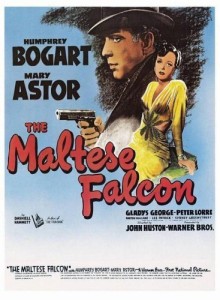 Since its beginning with The Maltese Falcon in 1941, the genre of film noir has been the quintessential American film style. It is recognizable around the world and features actors that went on to be stars and a wave of directors that became the best of their time. It has retained its popularity and relevance and with just a few films made over a 17-year-period, film noir still inspires cinema today.
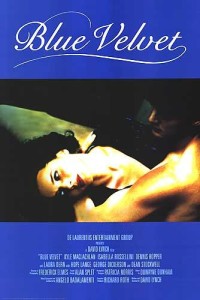 While neo-noirs are very conscious of being noir, the films do look different than the classics; the trademark black and white photography with its dark lighting is gone, as are the rain slicked city streets and the fedora and trench coat. But the psychological depth of the movies with its disorientation, anxiety, desperation, obsession, cynicism, and alienation remains. The end result is a protagonist that is an anti-hero, a dangerous woman, bad guys, and the queasy side of life and love. The stories still have the underlying element of crime with the femme fatale being updated as the post-feminist woman who has all of the sexuality and deviousness of the 1940s and 1950s femmes, but the neo-noir femme relies on her intelligence more. The noir protagonist might be a little smarter, but he still gets outsmarted by fate – the fate he chose. Technically, most of the films look great and the writing and directing, free from the industry morality codes of the classic era, produce films that are more violent and overtly sexual.
 From the novel by Jim Thompson, the hopelessness of the noir protagonist is portrayed in a punch drunk ex-prizefighter named Collie. When femme fatale Fay picks him up in a bar, patting the front seat of her car saying, “Come on now, there’s a good boy,” you can feel Collie surrendering to his fate. And after he agrees to take part in a poorly planned kidnapping scheme, it’s only a question of how he’s going down.
 The opening scene is done as a triptych that follows our three central characters as they all run their con games on the unsuspecting. They are very different con artists whose fates will intertwine. Roy is a short-con hustler, Myra is a former big-time grifter who has been reduced to turning tricks to make ends meet, and Lily is an employee of an East Coast bookie whose job it is to bet down the odds at racetracks.
 The sequel to Chinatown was pretty much panned by critics and fans alike, but has proven over time to be a great film in its own right. Ten years after the events that ended so badly in Chinatown, private detective Jake Gittes stumbles onto a case that takes him back to some of the skeletons in his closet. A scandal that is reminiscent of what happened ten years earlier, this time with real estate and oilfields, is at its center.
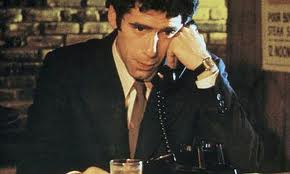 From the book by Raymond Chandler, this updated interpretation of Phillip Marlowe is a tad on the irreverent side. Gone is the 1940s voice-over replaced by a mumbling Marlowe (you will need those subtitles) who talks to himself as he makes his way through 1970s Los Angeles. This Marlowe is an idealistic dreamer who refuses to give into cynicism despite the corruption he sees around him.
 Returning WWII vet Easy Rawlins loses his job and is faced with the prospect of losing his house. A friend introduces Easy to trouble in the form of a shady character who offers him a chance to make some easy money. All he has to do is track down a politician’s wayward mistress who likes to hang out in black jazz clubs.
 Leonard has one purpose in life – find the man who murdered his wife. However the trauma of seeing his wife’s death results in a form of amnesia that prevents him from retaining new memories that last for more than a few minutes. So he leaves himself clues. All kinds of clues.
 This film has two stories unfolding at once; one real, one a dream. Struggling actress Diane Seldwyn creates an alternate existence to fix what is wrong in her life. Jealousy has destroyed Diane and eventually causes her to hire a hitman to kill her lover Carmilla. Her alternate reality as starlet Betty is the reconstruction of her life and her relationship with Carmilla, who becomes reincarnated in Diane’s mind as Rita. If it sounds complicated, that’s because it is.
 This film was produced with a budget of $1.5M, a first time writer and director, and a first time actor in the female lead. A love triangle with a woman in the middle who isn’t trusted by either man leads to a complex plot full of jealousy, paranoia, fear, suspicion, double crosses, murder and remorse, all set in a hole in the wall town in Texas.
 A small town California noir that has all the elements of a classic era story: a femme fatale married to a bad guy who also happens to be a dirty cop, a good guy/anti-hero who drifts into town and, as fate would have it, gets sucked into his own personal noir hell by a case of mistaken identity. There is also yet another psychopathic hitman from Texas who makes town to carry out a contract.
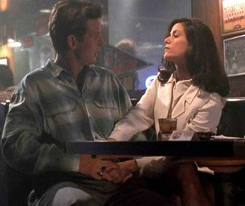 Bridget Gregory is the perfect example of the neo-noir femme fatale. She knows how to use her sexuality but also knows that she will need her brain even more. She’s aggressive and plays by her own rules, which are made up as she goes. Bridget leaves New York and her bad guy husband, Clay, with $100,000 of money from their drug dealing enterprise. Clay hires some muscle to find her and the money. To throw Clay off of the trail, Bridget stops in a small town in Western New York where she meets her soon to be obsessed and totally doomed noir sap. Local boy Mike is not too smart and Bridget can work with that. Her goal: kill her husband and get away with the money.
 This movie brought noir into the modern world. Filmed in beautiful muted color, Los Angeles is all reflective glass and steel and gangsters are businessmen in grey suits who hang out with accountants. Walker, his wife Lynn and his partner Reese, intercept a mob money drop on abandon Alcatraz Island in San Francisco Bay. After the robbery, Walker is betrayed by the two, shot and left for dead. Walker survives and lives for only one purpose: revenge. He wants them both dead and he wants his money back.
 It’s a hot summer in inland Florida, 1981. The heat is sweltering and the air is so still the wind chimes don’t move. No neo-noir has done better at creating a late 1940s feel in a contemporary setting. Ceiling fans, venetian blinds, long shadows, moody jazz clubs, everyone smokes, and no one has air conditioning.
 The opening shot from above pans down on Los Angeles in the year 2019. Processing plant towers shoot flame high into the dark sky. The tall buildings do not let what little sunlight filters through the pollution reach the canyon floor. The fog and rain are constant, falling on the overcrowded, claustrophobic streets populated by people on the fringes of society.
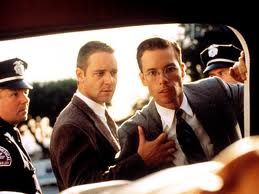 You can’t tell the good guys from the bad guys in the 1997 film that marks a return to form for noir. The sun drenched California Dream of the 1950s is exposed as a veneer that hides a sordid underbelly of crime and sleaze. Corrupt cops and politicians, high priced call girls “cut” to look like movie stars, renegade police hitmen, narcotics, blackmail, and cover-ups.
 One of the great period films ever made is also the first neo-noir period film. It has a perfect feel for the time, place, and sensibilities of pre-WWII America, when California was still wide open. It’s Los Angeles, 1937, and private investigator J.J. Gittes’ work brings him a mysterious client whose case is much more complex than most of his divorce surveillance work. Evelyn Mulwray is wealthy, beautiful, and a pathological liar. She hires Gittes, telling him she thinks her husband is having an affair. Gittes’ investigation to solve what is now a murder leads to her father, wealthy landowner Noah Cross, who is at the center of a plot to bring water from the L.A. reservoir to the valley, most of which he owns.

