By Gareth Lloyd
Richard Linklater truly is a gem of modern cinema. Not only are his films adroit illustrations of the magic that lurks within filmmaking; they are also imaginatively fresh alternatives to the Hollywood blockbuster material that often dominates the box office. His distinguishing style and attitude have established him as an underground director working with those above; bridging the gap between mainstream and experimental cinema through a combination of naturalised dialogue, wandering plotlines, colourful characters and mesh of Hollywood A-list stars. Yet, the real success of Linklater’s filming lies in his versatility.
Some of his pictures resemble a modest and benign exterior, oozing quality as they ebb on, whereas other productions adopt a chaotic and innovative appearance to present the audience with incredibly unique viewing experience. Linklater is the advocate, or perhaps pioneer, of the slacker ethos – promoting the act of slacking not as an unproductive and wasteful activity, but one of creativity and pure thought. His cinema has provided the acts of observation and quiet interrogation with an essence of intellect that cannot be rivalled, and the following presents a list of some of his best work to date.
1. Slacker (1991)
The rumblings amongst the independent film scene during 1991 caused by one of Linklater’s first cinematic efforts named Slacker can be seen in hindsight as a significant sign of things to come. The unorthodox style and attitude of Slacker immediately turned heads in the underground filmmaking community upon its release, and can be seen as the benchmark film to which the form of many of Linklater’s follow-up efforts can be traced. The swirl of intrigue caused by Slacker stemmed from the way in which Linklater directed, wrote and starred in a film that appeared to break textbook rules; defying Film 101 in its refusal to remain with a certain set of characters; instead casually ambling on to take in different people in different places.
Slacker’s exclusive quality is its refusal to commit to character-building rules; not neglecting any of the cast, but simply observing them for a certain amount of time before shifting elsewhere. A whole host of colourful characters are watched, including an anarchist, a conspiracy theorist, a taxi passenger (Linklater himself) and a hippy; all discussing a variety of subjects such as social issues, politics, and life itself. Linklater took the casual, meandering, eavesdropping style of Slacker and incorporated it into the likes of Dazed & Confused and Waking Life later in his career, and its elongated dialogue came to be recognised as his own personal cinematic stamp.
INDEED , whilst Slacker stands alone as a curiously compelling filmic experiment; for those looking into Linklater as a filmmaker it is essential viewing. Not only does it establish the director’s filmic roots, but it is also demonstrative of his skill and style even in his relative inexperience. The film has gone on to influence the likes of other filmmakers (Kevin Smith has often made reference to its inspiration), and can be considered a valuable nugget of independent filmmaking.
2. Dazed & Confused (1993)
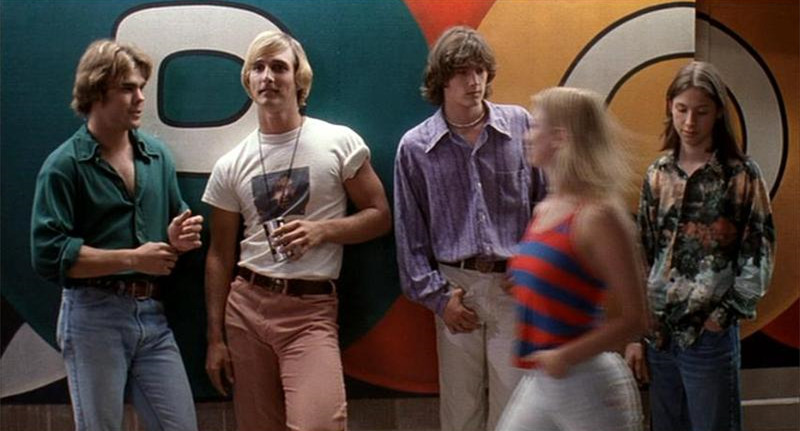
In a similar vein to his first feature Slacker, Linklater’s 1993 teenage biopic Dazed & Confused flits plotlessly across a plethora of teenagers on the last day of school, watching their behaviour and listening to their conversations. Carelessly drifting through one afternoon and night; the film has an aimlessness about itself that is echoed in the behaviour of its teenage protagonists. A bushy-haired Ben Affleck stars as an obnoxious bully, and Matthew McConaughey features as a slimy southerner, but the real star here is Wiley Wiggins, playing a freshman who – after the standard paddling initiation procedure – is taken under the wings of the graduates, looking up to them with bright and hopeful eyes throughout.
A sincere snapshot of young life in seventies America, Dazed & Confused is both refreshing and liberating in its refusal to simply exploit teenagers as props for cringe-worthy sex-disasters like many other films about adolescents so often do. The film portrays an accurately wide variety of teen personalities – some dumb, some intelligent, some angry, some laidback – but has time for them all. Declining to poke fun at puberty, yet refusing to become bogged down in nostalgia either, Dazed & Confused simply exists as an intimate observation of a memorable mark on the timeline of a teen – the end of the ACADEMIC year.
For some it’s the last day of high school forever, for others it is just beginning. But Linklater’s film doesn’t yearn for or regret these years, it simply relives them as they were; days of existing between childhood and adulthood; unsure of the future, unsure of themselves, unsure of how to behave – simply dazed and confused.
3. The Before Trilogy – Before Sunrise/Before Sunset/Before Midnight (1995, 2004, 2013)
Richard Linklater’s ‘Before’ trilogy covers three films, spans eighteen-years, follows two people, takes place in three separate countries, earned two Academy Awards, and contains countless amounts of conversation. Inspired in its satisfaction to simply sit and listen to an intellectual and good-natured man and woman conversing with one another, the Before series grows with its characters – depicting young hope, blossoming love and search for self-discovery and content.
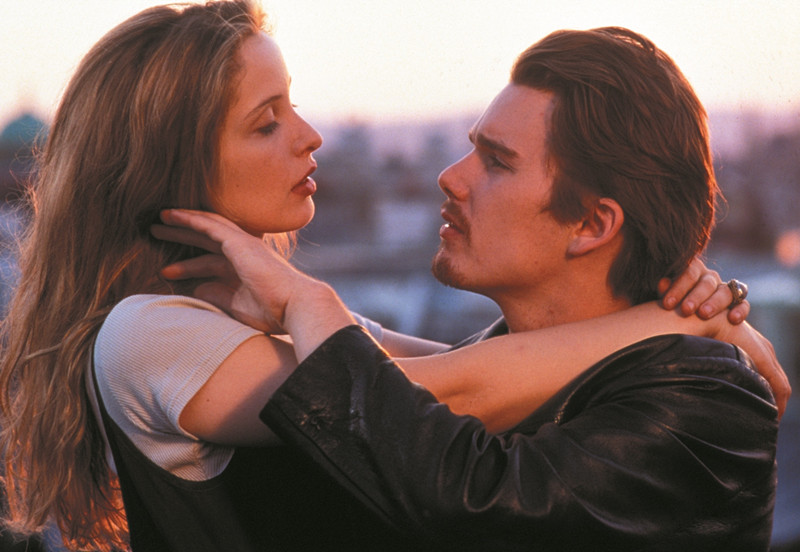
The two leads of Jesse and Celine are played wonderfully by Ethan Hawke and Julie Delpy respectively, who have terrific chemistry right across the series. The first act of Before Sunrise shows how they meet; sharing the same train ride through Europe. An instantaneous, quirky chemistry pushes them along into the lounge car together, where they get to know one another and their nervous smiles turn gain warmth and affection.
They discuss and reflect, politely exchanging obligatory questions before delving deeper into one another’s lives, steadily and unhurriedly learning more about the other, and also themselves. Jesse convinces Celine to alight with him in Vienna, and the two share a remarkable night together wandering around the city. As their time runs out, the two agree to preserve the night’s perfection in their refusal to switch information, instead agreeing to meet at the same place six months later.
Before Sunset reveals that this encounter never occurred, but Jesse and Celine do meet again nine year later in Paris; both not entirely fulfilled by their lives and still deeply nostalgic about their shared night in Vienna. Before Midnight signals a significant third chapter as the two are married with twin girls, yet their ideas of fantasy and stimulating conversation remain ever-present.
The intelligence of the series lies in its identification of perfect imperfections, unanswerable questions and desire to understand the notion of soul-mate or significant other. Linklater’s meandering style is reflected in the couple’s aimless strolls through European cities; and each instalment in the Before trilogy depicts a strange beauty and happiness in walking and talking. Even making an appearance in a scene in Waking Life, Jesse and Celine are some of the most richly drawn characters in Linklater’s cinematic world.
4. Waking Life (2001)
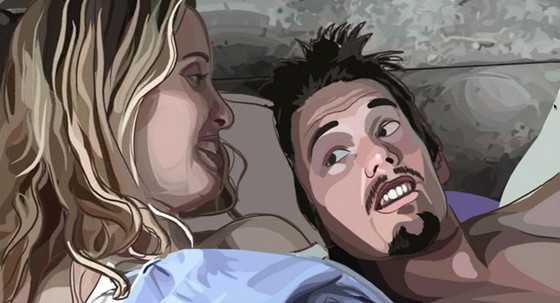
One of his most thought-provoking films to date, Waking Life sees Richard Linklater at his most philosophical, his most curious, and arguably his best. Through APPLICATION of interpolated rotoscoping – a technique involving filming as usual followed by animation drawn over the top of this footage – Waking Life achieved a breakthrough in animated cinema. With this film, Linklater attempts to capture the essence of dream state whilst pondering life; creating a new world that defies ideas of conventional filmic direction and space.
An unnamed protagonist played by Wiley Wiggins moves between a wide variety of settings and philosophical conversations with ACADEMICS and intellectuals, never knowing where he is going or why he is going there, all-the-while seemingly unable to wake up from a never-ending dream. Each philosophical interrogation in Waking Life has no one true answer, but rather multiple possible answers; allowing for a fluidity that matches appropriately to the style of animation; with every aspect within the frame being both fluid and constantly in flux.
An absolutely unique viewing experience that draws on the style of Slacker, the approach of Dazed & Confused and the contemplative nature of Before Sunrise, Waking Life even goes as far as to reintroduce previous Linklater characters; with Wiggins possibly a graduated and grown-up version of the teen from Dazed & Confused, and Before characters Jesse and Celine even making an appearance. Of course, they may not be who we think they are. The film is engulfed in a woozy vagueness that ensures nothing is ever certain. Waking Life is an area of unlimited possibility and astonishing interest, hypnotising in its refusal to be categorised and one of the most interesting cinematic experiences offered by one of America’s most interesting directors.
5. Tape (2001)
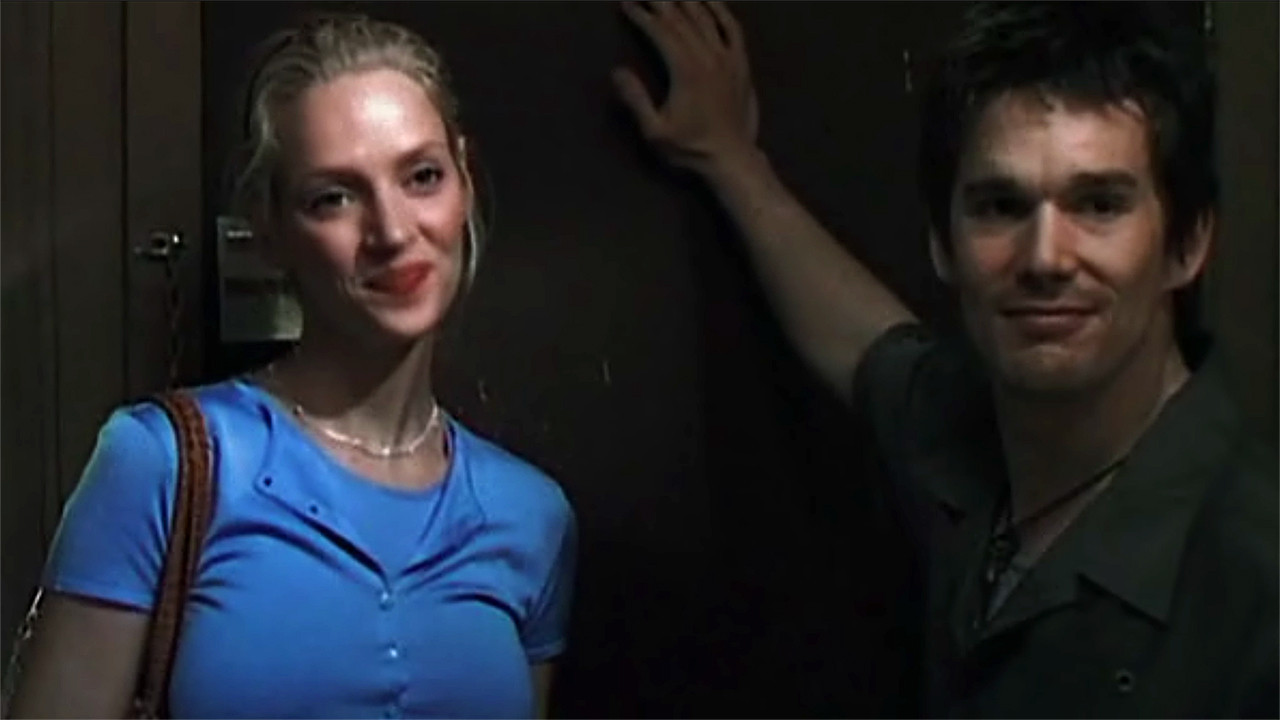
Based entirely within a Michigan hotel room, Tape runs like a play and looks like a nineties home video. A far-cry from typical Linklater film on its surface, the film comes to simulate the director’s idealised style as it wears on; becoming consumed by deep-meaning dialogue. Resisting the aspect of queasy handheld camera, Linklater retains the washed-out aspect of camcorder filming but accompanies it with a steady hand, allowing for an unblinking eye that inexorably pins the characters between the hotel walls.
Starring just three performers, Tape tells the tale of Vince (Ethan Hawke), a scatty drug-dealer from Oakland who has checked into the room to come and support his high-school friend Jon (Robert Sean Leonard), an aspiring director whose first film is due to screen in a festival the next morning. Jon arrives at the room to thank Vince for his support, and as the two begin to reminisce about life, it is clear that an unaddressed elephant resides in the room.
They eventually arrive on the topic of Amy (Uma Thurman) who arrives in the film’s final third, and it is revealed that both men have a history with her. What everything boils down to is a tape that Vince has secretly made, a recording that threatens to change their lives forever. Vince seems a little sneaky on first-viewing, but cunningly prepared in retrospect. And that’s what makes Tape so impressive. Everything is decisively in the moment, so much so that there is no time to guess what comes next, let alone consider it.
The growth of these characters within the real-time context of ninety-minutes is incredible; a variety of emotions and accusations fly around the room, continually changing the attitudes of both the audience and the characters themselves. Linklater’s soft-zooms and whip-pans sustain the pressure and tension put forth by the absorbing knife-edge dialogue, which is exerted superbly by each of the performers.
Linklater has utilised Hawke in a variety of roles throughout his career, but the actor really excels himself here, giving an astonishingly natural performance with first-rate delivery. Thurman shifts from innocent to icy, and Leonard’s portrayal of a pretentious director looking-down on his old friend is both authentic and skilful. Tape is a story about determining the past, and the ramifications this will have for the future, but the film’s execution remains resolutely in the present: spontaneous, happening and authentic.
6. School of Rock (2003)
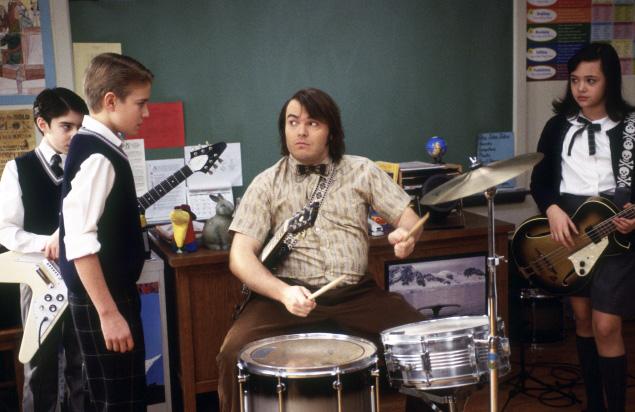
Whilst the promotional poster of a demented Jack Black clawing at a guitar may be enough deter those who would say that Tenacious D weren’t entirely their cup of tea, School of Rock is for the most part an absolute riot. It’s difficult to determine who exactly the film will appeal to, but with Linklater’s carefree attitude right at its heart, the film boasts an undeniably impressive energy that threatens to rock its way off the screen.
Black stars as Dewey Finn, a down-on-his-luck musician who’s evicted from his band ‘No Vacancy’. With the threat of EVICTION looming over him, he begrudgingly takes a substitute teacher position at the local school. Whilst initially bemoaning his rotten luck and constant struggle, he soon begins to bond with his class after discovering they share a taste for rock music, and decides to impose an alternative syllabus of rock n’ roll.
The results are predictable but infectiously uplifting, and the whole cast appear to be having a hell of a good time throughout, as absolute pandemonium bangs around them. Touching, funny and ludicrous, School of Rock is a further advert for Linklater’s flexibility for film, arriving in a loud and delirious package.
7. A Scanner Darkly (2006)
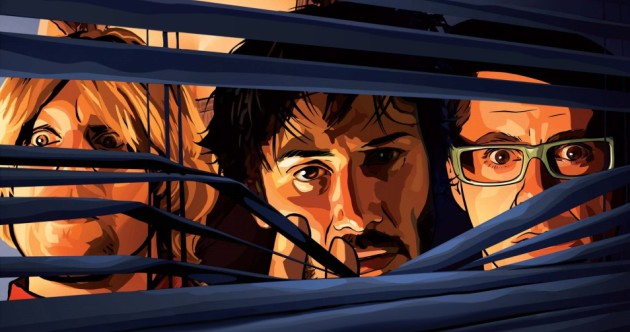
A fittingly trippy adaptation of Philip K Dick’s psychedelic-laced novel, A Scanner Darkly sees Linklater again gather an illustration team to add a hallucinatory touch to his camera findings –coating a sleek animated varnish over a star-studded cast that includes Robert Downey Jr, Keanu Reaves, Winona Ryder, Rory Cochrane and Woody Harrelson. In many ways the darker, more pessimistic and more handsome brother to Waking Life; A Scanner Darkly sedates the restlessness that pulsed throughout Linklater’s 2001 film; allowing for a bolder, glossier effect that has to rank as some of the most incredible animation ever put up on screen.
Dick’s radically avant-garde ideas are faithfully adapted by Linklater, and whilst the storyline often appears convoluted, the film pulls together the seemingly endless amount of loose threads in some satisfying closing shots that surprise and impress all at once. Set in a drug-addled dystopian near-future, A Scanner Darkly depicts the aftermath of America’s infatuation with a drug called Substance D, a med that threatens to destroy the country in its cause of decay, SICKNESS, psychosis and decease.
Nothing is ever quite as it seems – with the characters themselves often mystified as to who they are or what is going on around them – and interwoven with the interpolated rotoscope effects, this makes for a mind-bending trip of a movie. Robert Downey Jr is typically excellent, adopting the fidgeting, paranoid demeanour of an addict with both fascinating and amusing results, whereas Reaves acts as an offshoot of himself; embodying the role of an unaware everyman exposed to a world he doesn’t truly understand.
The sickening scent of disease that lingers around the film, threatening to infect each frame, is often best conveyed through the behaviour of Cochrane, whose wild-eyed yelping and obsessive scratching is enough to ruffle even the most impassive viewer. Creative to its core, A Scanner Darkly depicts ideas of dauntingly invasive technology in a society teetering on the brink of insanity. The opening scene is so skin-crawling it remains capable of imparting an insect phobia to an entomologist, and Linklater’s venture into the dark depths of the human mind is one that’s impossible to forget.
8. Me and Orson Welles (2008)
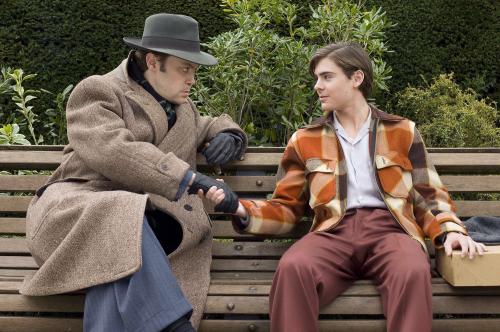
Linklater pays tribute to one of cinema’s greatest directors of all time with Me and Orson Welles, a fictionalised account of a youngster being accepted into the world of Welles and discovering all it has to offer. Christian McKay doesn’t so much perform as Welles but rather completely embodies him, from his egotistical roars and stunning artistic vision to modest mannerisms such as the chomping of a cigar. Zac Efron plays the young man who is given a role in Welles’s theatre production of Julius Cesar, understandably startled under the bold and brash demeanour of the director.
Whilst not necessarily the kindest or saint-like portrayal of Welles, Linklater ensures that the genius of the man who made Citizen Kane is consistently underlined. Efron is commendable as the aspiring Richard Samuels, and obligatory love-interest Claire Danes is charming as Sonja. Whilst the battle that commences between Samuels and Welles for her attention occasionally lags, it does have its intriguing moments. But the real power of the film lies in its depiction, and awe of, a treasured director of American cinema.
The film monitors the backstage artistry and conception of a famous play in the hands of a great innovator, and whilst often overlooked in terms of Linklater’s work, Me and Orson Welles is in parts a fascinating inspection of a cinematic pioneer, who’s early work inspired the likes of Linklater and in turn his own fascinating filmmaking.
9. Bernie (2012)
An unadulterated case in point for up-close-and-personal filmmaking, Bernie’s most mind-boggling aspect is the way in which the director himself eventually became an important part of the fascinating story he had tried to depict. Acting as both an intrinsic biopic and also morality tale of how no man is beyond breaking point, this 2012 release ended up inviting criticisms and inputs from society, the penal system, the judicial system and the film world in general.
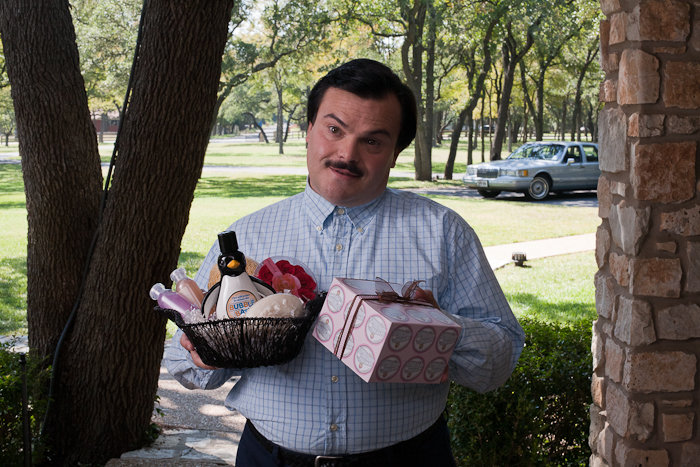
A mockumentary in form, Linklater puts a black satirical comedic spin on a true Texas town murder in 1996; an event that shook a tiny community, and effectively put this corner of Carthage on the map. Jack Black stars as eponymous main man Bernie Tiede; a gregarious do-gooder from a snug southern corner of America. The documentary format shows a variety of interviews with town residents, revealing a unanimous adoration for Bernie throughout the community, stretching from top to bottom.
This respect stretches to pity as the film wears on, as the naïve and compassionate Bernie begins to care for cold-hearted widower Marjorie Nugent, who instead of thanking him for his efforts, proceeds to ceaselessly bully and demean him. When Marjorie goes missing, only Sherriff Danny Buck Davidson (played by Matthew McConaghey in a performance that invigorated his lagging career) smells a rat in Bernie. The revelation that the kind-hearted Tiede did in fact shoot Marjorie Nugent dead goes down like a lead balloon, and Bernie is sentenced to life imprisonment.
Linklater’s documentary-like satire conveys a sheltered little town’s reaction to the news of how even the nicest man can be driven too far. Just months ago, the real Bernie Tiede was in fact bailed from his sentence, on the condition that he reside with Linklater; the filmmaker who’d been visiting him frequently over the past few years for assistance on the film about Tiede’s life.
As such, Bernie became the focus of a minor scandal in suggestions that the film influenced the legal system, and the incredible events surrounding the production have threatened to dwarf the eminence of the film itself. Jack Black gives a career-high performance in the lead role, and Shirley MacLane is suitably sharp as the incessantly abusive Marjorie. Offbeat and unusual in all kinds of ways, Bernie is wickedly unique; even for Richard Linklater.
10. Boyhood (2014)
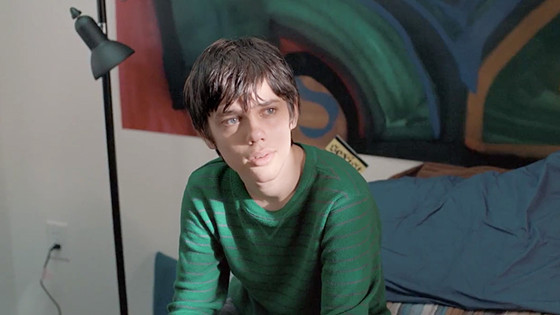
Arguably his most epic and imposing film to date, the impending release of Linklater’s most recent film Boyhood has had cinephiles on the edge of their seats for years. Having already garnered an enormous wealth of critical praise, Boyhood has been filmed over a real-time period of twelve years, acting as an authentic examination of a real-life youngster blossoming from a tender child into a resilient adolescent.
Linklater predictably finds a role for Ethan Hawke as the father, with Patricia Arquette playing the mother and Linklater’s own daughter also having a role following her brief appearance in Waking Life as a young girl. Due for release over the summer period, Boyhood looks utterly unmissable, and will at the very least cement Linklater’s footprint in committed and creative filmmaking.
http://www.tasteofcinema.com/2014/10-essential-richard-linklater-films-you-need-to-watch/#syEB89D9uIV5c4LU.99